This website uses cookies so that we can provide you with the best user experience possible. Cookie information is stored in your browser and performs functions such as recognising you when you return to our website and helping our team to understand which sections of the website you find most interesting and useful.
In Lebekere, a rural municipality in the Mali prefecture, located in the Labé region of Middle Guinea, biodiversity is deeply embedded in rich social and cultural dynamics, where roles and responsibilities have long been historically defined. The gender analysis conducted as part of the Biodiversity Corridors project is based on field data collected by Coopération Atlantique Guinée 44, and was analyzed and written by WECF under the direction of Maëva Bréau, Director of WECF France, with contributions from Marion Cassinot and Alpha Oumar Barry. It highlights significant structural inequalities between women and men, while also emphasizing the central role women play in local socio-economic systems.
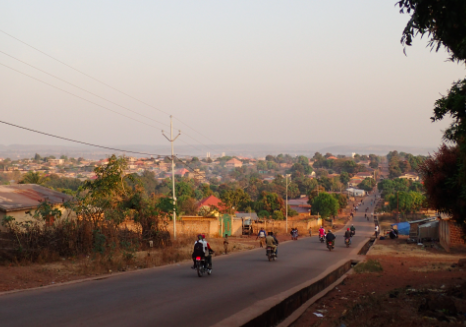
The Labé region remains marked by high economic vulnerability, with 55.3% of the population living below the poverty line. In this context, women are particularly exposed to precarious conditions, as they largely depend on informal activities that are often less remunerative. Economic activities are strongly rooted in local systems of organization and solidarity, within which women play a key role, especially in agriculture, processing, and natural resource management. The literacy gap illustrates this disparity: 43% for men compared to 22% for women. Beyond the figures, this gap directly affects access to economic opportunities and participation in local decision-making spaces.
The study also highlights the persistence of traditional practices that disadvantage girls. Indeed, 40% of girls are married before the age of 18, and early motherhood remains a significant factor increasing health risks. Maternal health indicators are also concerning, with maternal mortality estimated at 550 deaths per 100,000 live births, reflecting limited access to adequate obstetric care.
Despite these challenges, women remain essential actors in production systems. They actively contribute to the local economy: 78.2% of households report agriculture as their main activity, a sector in which women are heavily involved. However, their access to land and production resources remains limited. In terms of employment, women are predominantly engaged in vulnerable jobs, with an estimated rate of 82%, compared to 69% for men. Their access to credit and agricultural inputs is also constrained.
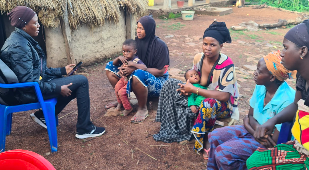
A clear gap persists between women’s daily roles and their influence in decision-making. Local governance spaces are shaped by social norms that assign different roles to men and women. For example, during consultations, only 11 out of 29 participants were women, illustrating their limited representation. Local and customary councils remain largely male-dominated, as male voices are often perceived as more legitimate.
As a result, while women actively participate in activities, they are rarely involved in strategic decision-making or governance. This represents a critical consideration for environmental projects: sustainable natural resource management requires a nuanced understanding of existing roles and the ability to value all contributions, while respecting local structures and social norms.
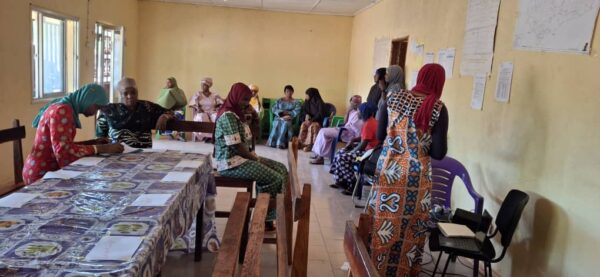
Encouragingly, the report highlights positive dynamics, particularly through women’s associations. These spaces play a key role in fostering solidarity, organization, and expression. They are perceived as legitimate platforms where women’s voices carry more weight and where they feel more confident to engage. As such, these associations are valuable spaces for strengthening women’s agency.
The report’s recommendations build on these existing dynamics. They include ensuring at least 40% representation of women in corridor governance bodies, with meaningful decision-making roles, as well as leadership training, public speaking support, and environmental mentorship programs. The establishment of mixed resource management committees (including men, women, and youth) is also proposed, particularly for managing natural resources and preventing human-wildlife conflicts.
The report also emphasizes the importance of community-based financing mechanisms, including carbon credits, alongside the creation of structures for commercialization and monitoring. Ensuring equitable access to resources and economic benefits—whether land, seeds, financing, or tools—is another key priority. Strengthening women’s economic empowerment also involves supporting sustainable activities such as agroforestry, beekeeping, green entrepreneurship, and micro-grants.
Finally, the development of governance systems that integrate gender-sensitive indicators, disaggregated data, and equity monitoring mechanisms is identified as a structural lever. In the context of biodiversity corridors, gender considerations are particularly critical. Women, who are deeply involved in the daily use and management of natural resources—through agriculture, gathering, and processing—hold essential knowledge and practices for ecosystem preservation. Their inclusion would therefore strengthen the relevance and sustainability of conservation efforts.
Lebekere ultimately reflects a broader reality: ecological transition is closely intertwined with social dynamics. Integrating gender considerations helps anchor projects in local realities and supports the development of truly inclusive approaches, grounded in the roles, knowledge, and aspirations of all stakeholders.